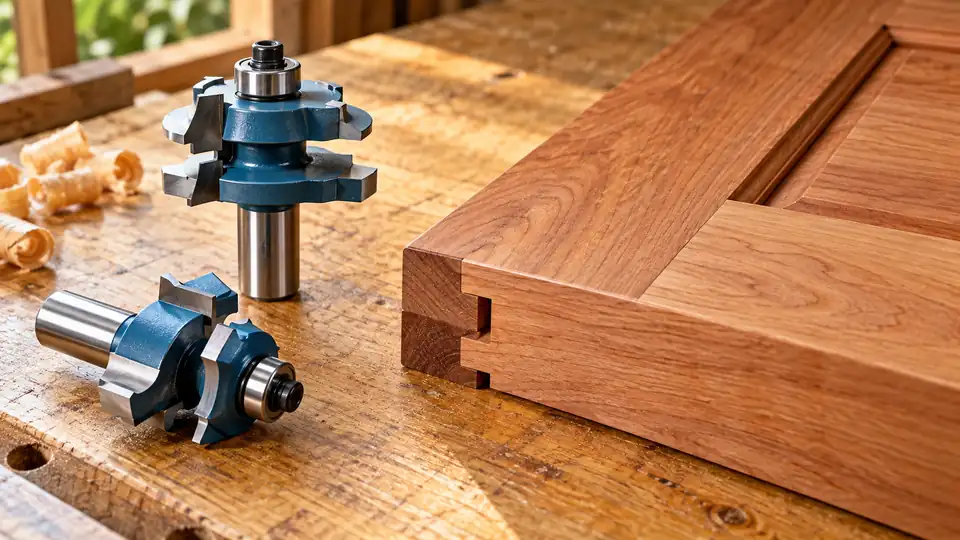
A cabinet-door frame can look crisp and square until the cope-and-stick joint closes with a hairline gap, a stubborn ridge, or that dreaded little chip at the end of the rail. Rail and stile router bits shape mating profiles, so their geometry, groove dimensions, stock range, shank size, and router-table requirements matter far more than flashy packaging. The best set for a flat Shaker door may be a poor match for a deep ogee panel, which is where careful comparison starts paying off.
Common buying mistakes include choosing a profile before checking stock thickness, confusing panel thickness with groove width, and assuming every set belongs in a handheld router. The products here are intended for table-mounted routing, while several use large cutters that demand close attention to the manufacturer’s speed limits and setup instructions. A 1/2-inch shank generally suits heavier cabinet-door work, but a documented 1/4-inch option may make sense for a compatible table-mounted router and a carefully planned project.
Different shops have different priorities. One woodworker may need an adjustable groove for veneered plywood, while another wants a straightforward Shaker pair that can stay set up through a run of matching doors. The Freud Premier Adjustable 99-762 takes the top position because its 7/32-inch to 3/8-inch groove adjustment, broad 5/8-inch to 1-1/4-inch door range, and long-tenon system address several practical cabinetmaking headaches in one cutter system.
Quick Answer
- Best overall: Freud Premier Adjustable Rail & Stile Bit 99-762 offers adjustable groove width and supports multiple door materials and thicknesses.
- Best dedicated Shaker set: Rockler Shaker Rail and Stile Router Bit Set uses a two-bit, bearing-guided arrangement with a distinctive chamfered edge.
- Best contemporary profile: Whiteside 6009 15 Degree Shaker Stile & Rail Router Bit cuts a defined 15-degree profile for actual 1/4-inch panels.
- Best complete door set: YONICO Raised Panel Cabinet Door 3-Bit Set 12345 combines frame cutters with a center-panel bit.
Best Rail And Stile Router Bits Comparison Table
| Product | Best For | Profile | Shank | Key Working Specs |
|---|---|---|---|---|
| Freud Premier Adjustable 99-762 | Adjustable cabinet-door work | Premier rail and stile | 1/2 inch | 7/32 to 3/8 inch groove; 5/8 to 1-1/4 inch doors |
| Rockler Shaker 2-Piece Set | Dedicated Shaker doors | Chamfered Shaker | 1/2 inch | Bearing-guided; table-mounted router use |
| Whiteside 6009 | Contemporary Shaker styling | 15-degree Shaker | 1/2 inch | 1/4-inch tongue; 3/8-inch tongue depth |
| Freud Premier Adjustable 99-763 | Round-over bead doors | Round-over bead | 1/2 inch | 9/32-inch radius; 5/8 to 1-1/4 inch doors |
| YONICO Shaker 12249 | Straightforward Shaker frames | Shaker | 1/2 inch | 3/8-inch cutting depth; stock up to 7/8 inch |
| YONICO Round Over 12241 | Thicker round-over frames | Round over | 1/2 inch | 3/8-inch cutting depth; stock up to 1 inch |
| YONICO Large Ogee 12236 | Deep traditional profiles | Large ogee | 1/2 inch | 7/16-inch cutting depth; stock up to 7/8 inch |
| REKCKRUL 3-Piece Ogee Set | 1/4-inch collets | Ogee | 1/4 inch | 3/8-inch cutting depth; stock up to 1 inch |
| YONICO Raised Panel 12345 | Frames and center panels | Ogee raised panel | 1/2 inch | Three-bit set; table-mounted router use |
The detailed reviews below clarify where each profile fits and which setup limitations deserve attention.
1. Freud Premier Adjustable Rail & Stile Bit 99-762 — Best Overall

The most useful feature here is the shim-adjustable groove, which spans 7/32 inch through 3/8 inch. That range gives a cabinetmaker room to accommodate thin veneered plywood or a thicker solid-wood panel without treating every panel as though it came from the same nominal mold. The cutter supports doors from 5/8 inch to 1-1/4 inches thick, a broad working window that makes it considerably more adaptable than a fixed 3/8-inch-depth set.
Freud specifies a 1-11/16-inch diameter, 1/2-inch shank, TiCo Hi-Density Carbide, and Perma-SHIELD coating. The bit works in a table-mounted router across veneered plywood, hardwood, and softwood, while the patented system forms extended tenon joints. Those are meaningful details for a door that receives daily pulls and bumps. Adjustment introduces extra setup work, though, and careful test cuts remain part of the bargain whenever shims or material thickness change.
Pros
- Groove adjusts from 7/32 inch to 3/8 inch with precision shims.
- Supports door thicknesses from 5/8 inch through 1-1/4 inches.
- Documented for veneered plywood, hardwood, and softwood.
- Long-tenon system provides increased joint engagement.
- TiCo carbide and Perma-SHIELD coating address cutter wear, friction, pitch, and corrosion.
Cons
- Shim adjustment requires more setup care than a fixed-geometry two-bit pair.
- Requires a table-mounted router with a compatible 1/2-inch collet and suitable cutter clearance.
This Freud cutter fits cabinetmakers who move among different panel constructions or door thicknesses and would rather tune one system than keep several fixed sets nearby. A shop building one batch of basic Shaker doors may find the YONICO 12249 simpler, but the Freud’s adjustable groove and wider stock range carry more weight across varied projects.
To buy this product, click here.
2. Rockler Shaker Rail and Stile Router Bit Set — Best Dedicated Shaker Set

Rockler’s two-piece set focuses squarely on Shaker doors and drawers, adding a chamfered edge rather than an elaborate traditional flourish. One cutter forms the cope across each rail end, while its mate creates the sticking profile and panel groove along the frame edges. Bearing guidance helps control the profile against the work, a welcome detail when a tiny dip would remain visible after the rails and stiles meet.
The 1/2-inch shanks and high-grade carbide suit a table-mounted workflow, and Rockler specifically calls for reduced RPM. Its instructions recommend making cope cuts while the rail edges are still flat and square, allowing a flat backer board to support the exit edge and limit tear-out. That sequencing is genuinely useful. Picture trying to brace a freshly profiled rail against a backer, where the shaped edge rocks instead of sitting flush, and the logic becomes immediately clear.
Pros
- Two dedicated cutters form matching cope-and-stick Shaker joints.
- Chamfered detail gives flat-panel doors a defined but restrained edge.
- Bearing-guided cutting helps prevent profile dips.
- Sturdy 1/2-inch shanks support stable table-mounted routing.
- Supplied setup guidance explains cope-first sequencing and backer-board use.
Cons
- Restricted to table-mounted router use at reduced RPM.
- The supplied information does not specify a supported stock-thickness range or groove width.
Choose this pair for a dedicated Shaker-door operation where clear setup guidance and bearing control are more valuable than adjustable groove width. Buyers who use panels with varying actual thicknesses should look harder at the Freud 99-762, since Rockler’s supplied specifications do not document comparable groove adjustment.
To buy this product, click here.
3. Whiteside 6009 15 Degree Shaker Stile & Rail Router Bit — Best Contemporary Profile

A square Shaker profile can feel a little severe on contemporary furniture, while a sweeping ogee can look too ornate. The Whiteside 6009 splits that difference with a specific 15-degree Shaker profile, introducing a subtle slope around the panel opening. Its geometry is meant for actual 1/4-inch panels, so the panel specification is refreshingly direct rather than hidden behind a vague nominal label.
The documented dimensions include a 1-inch cutting length, 1-5/8-inch large diameter, 1/2-inch shank, and 1/4-inch tongue thickness. It creates a 3/8-inch-deep tongue-and-groove joint and is specified for natural and composite woods. Those numbers make compatibility checks easier before the router starts humming. They also narrow the use case, since a panel that differs from the specified actual 1/4-inch thickness should not be assumed to fit without a separate, verified plan.
Pros
- Creates a clearly defined 15-degree Shaker profile.
- Specified for actual 1/4-inch panels.
- Uses a 1/2-inch shank for compatible router-table collets.
- Documented 1/4-inch tongue thickness and 3/8-inch joint depth simplify project planning.
- Suitable for natural and composite wood materials according to the supplied specifications.
Cons
- The actual 1/4-inch panel requirement limits flexibility with undersized or thicker panels.
- The supplied information does not document an adjustable groove system.
This is the sharpest fit for slab-front-adjacent cabinetry and modern furniture that still needs a framed door with visible detail. It asks the buyer to commit to a particular panel thickness and 15-degree look, so the Freud 99-762 remains more adaptable while the Whiteside offers the more distinctive contemporary profile.
To buy this product, click here.
4. Freud Premier Adjustable Rail & Stile Bit 99-763 — Best Round-Over Bead

The Freud 99-763 turns toward a softer, more traditional frame with its round-over bead profile. A 9/32-inch radius rounds the transition surrounding the panel, producing a stronger visual shadow than a plain square edge without diving into the deeper curves of a large ogee. The system supports door thicknesses from 5/8 inch through 1-1/4 inches, which suits projects ranging from lighter furniture doors to more substantial frames.
Its cutter measures 1-11/16 inches in diameter and 3-3/4 inches in overall length, paired with a 1/2-inch shank. Freud specifies table-mounted routing in hardwood and softwood, plus TiCo Hi-Density Carbide and Perma-SHIELD coating. The patented long-tenon arrangement increases joint engagement, a particularly relevant feature where wide doors place leverage on their corner joints. The profile remains a deliberate stylistic choice, however, and cannot impersonate the spare geometry of a Shaker cutter.
Pros
- Round-over bead profile provides a softer traditional frame detail.
- Documented for door thicknesses from 5/8 inch to 1-1/4 inches.
- Long-tenon system increases the joint’s mating area.
- TiCo Hi-Density Carbide is formulated for this cutting application.
- Perma-SHIELD coating addresses friction, resin accumulation, and corrosion.
Cons
- Requires a table-mounted router and compatible 1/2-inch collet.
- The rounded bead is less suitable for buyers seeking a flat, restrained Shaker appearance.
This Freud model suits furniture and cabinet doors where a curved bead feels intentional and the stock may vary in thickness from project to project. The YONICO 12241 offers a simpler round-over pair for stock up to 1 inch, while the Freud brings the broader documented door range and long-tenon system.
To buy this product, click here.
5. YONICO Shaker Rail and Stile Router Bit Set 12249 — Best Straightforward Shaker Pair

The YONICO 12249 keeps the recipe simple: two cutters, a Shaker profile, 1/2-inch shanks, and a documented 3/8-inch cutting depth. It accommodates stock up to 7/8 inch, covering a practical range for many cabinet-door frames without introducing shims or a multi-part cutter stack. For a batch of doors made from consistently milled stock, that fixed geometry can make the setup bench feel pleasantly uncluttered.
YONICO specifies C3 micro-grain tungsten carbide cutting edges and silver induction brazing between the cutters and bodies. The pair arrives in a wooden box, which helps keep carbide edges separated rather than rattling together in a drawer. Use is limited to a table-mounted router, an appropriate constraint for cutters that shape long frame edges and cope narrow rail ends. Accurate fence height, a square miter gauge or coping sled, and test pieces still determine whether the joint closes cleanly.
Pros
- Dedicated two-bit arrangement covers Shaker rail and stile operations.
- Documented 3/8-inch cutting depth supports clear setup planning.
- Works with frame stock up to 7/8 inch thick.
- Uses C3 micro-grain tungsten carbide cutting edges.
- Wooden storage box keeps the matched cutters organized and separated.
Cons
- Restricted to table-mounted router use.
- Fixed geometry offers less panel-thickness flexibility than an adjustable cutter system.
This pair fits a woodworker building uncomplicated Shaker frames from uniform stock and using a router table with a 1/2-inch collet. Skip it if the project moves beyond 7/8-inch frame material or regularly alternates among panels of substantially different thicknesses, where an adjustable Freud system offers more breathing room.
To buy this product, click here.
6. YONICO Round Over Rail and Stile Router Bit Set 12241 — Best For Stock Up To 1 Inch

Thicker frame stock can give a large cabinet door more visual substance, but it immediately rules out sets with a lower documented limit. The YONICO 12241 accepts stock up to 1 inch thick and cuts its round-over rail-and-stile pattern to a depth of 3/8 inch. That rounded transition catches light more softly than a square Shaker edge, making it useful for cabinetry that needs gentle detail without a deep carved profile.
The pair uses 1/2-inch shanks and C3 micro-grain tungsten carbide blades, with silver induction brazing specified for the cutter attachment. A wooden case provides tidy storage between door projects. Like the other cabinet-door sets in this roundup, it belongs in a table-mounted router, where the fence and work support can manage long stiles and end-grain cope cuts. The supplied data does not identify groove adjustment, so panel sizing and test joints should be settled before milling an entire stack.
Pros
- Supports frame stock up to 1 inch thick.
- Round-over profile creates a softer panel-opening transition.
- Documented 3/8-inch cutting depth aids setup calculations.
- Uses 1/2-inch shanks and C3 micro-grain tungsten carbide cutters.
- Includes a wooden box for matched-set storage.
Cons
- Table-mounted router use is required.
- No adjustable groove range is documented in the supplied specifications.
This set makes sense for thicker round-over door frames where a fixed, repeatable profile is preferable to frequent cutter reconfiguration. Buyers working within 7/8-inch stock and craving a deeper classical shape should consider the YONICO 12236 instead, while Shaker projects call for a genuinely square-profile option.
To buy this product, click here.
7. YONICO Large Ogee Rail and Stile Router Bit Set 12236 — Best Deep Ogee Profile

A large ogee creates a bolder line around the center panel, with a deeper sweep that feels at home on traditional furniture and raised-panel cabinetry. YONICO’s 12236 pair cuts that profile to a documented depth of 7/16 inch in stock up to 7/8 inch. Compared with the brand’s 3/8-inch-depth Shaker and round-over pairs, the extra profile depth is a visible design decision rather than a minor numerical footnote.
Both cutters use 1/2-inch shanks, C3 micro-grain tungsten carbide blades, and silver induction brazing. They also come in a wooden box, useful for protecting the shaped edges and keeping the matched set together. YONICO specifies table-mounted router use only. The deeper profile removes more material than a restrained Shaker edge, so controlled passes, secure work support, and the cutter manufacturer’s operating guidance deserve close attention before the first long stile passes the bit.
Pros
- Deep ogee geometry creates a pronounced traditional frame profile.
- Documented 7/16-inch cutting depth distinguishes it from shallower YONICO sets.
- Supports frame stock up to 7/8 inch thick.
- C3 micro-grain tungsten carbide cutters are silver induction brazed.
- Matched bits are supplied in a wooden storage box.
Cons
- The ornate ogee profile is a poor visual match for minimalist Shaker cabinetry.
- Use is limited to a table-mounted router.
Pick the 12236 when the frame itself should carry strong decorative weight and the planned stock remains within its 7/8-inch limit. The shallower YONICO round-over set feels quieter, while the three-piece 12345 becomes more useful when the job also requires shaping an ogee center panel.
To buy this product, click here.
8. REKCKRUL 3-Piece Ogee Rail and Stile Router Bit Set — Best 1/4-Inch-Shank Ogee Set

The REKCKRUL set is the lone 1/4-inch-shank ogee option among these nine picks, which makes its compatibility story clear for buyers whose table-mounted router accepts that collet size. The three-piece package is specified for cabinet doors, window frames, and drawers, with a 3/8-inch cutting depth and support for stock up to 1 inch. Documented materials include wood, MDF, plywood, particleboard, and hardwood, while metal and other non-wood media are excluded.
Tungsten carbide cutters, a balanced construction, and an anti-kickback body design are listed features. Two different operating ceilings appear in the supplied data: up to 18,000 RPM for one configuration and up to 16,000 RPM alongside the stated 2-1/2-inch cutting diameter. That discrepancy should push the owner toward the product documentation and the lowest applicable cutter limit rather than guesswork. A 1/4-inch shank also should never be improvised into a different collet size.
Pros
- Documented 1/4-inch shanks suit compatible 1/4-inch router collets.
- Three-piece ogee set supports several cabinet-door shaping operations.
- Works with stock up to 1 inch thick.
- Specified for wood, MDF, plywood, particleboard, and hardwood.
- Anti-kickback geometry and tungsten carbide cutters are documented features.
Cons
- The supplied RPM information lists two different maximum limits, requiring manual verification before use.
- Limited to table-mounted routing and unsuitable for metal or other non-wood materials.
This set fits a shop committed to a compatible 1/4-inch collet and looking for an ogee package that handles frame stock up to 1 inch. The conflicting speed figures are the central trade-off and should be resolved before installation. Buyers with a 1/2-inch collet and no need for this specific package have several more clearly documented alternatives above.
To buy this product, click here.
9. YONICO Raised Panel Cabinet Door 3-Bit Set 12345 — Best Complete Door Set

A two-bit rail-and-stile pair builds the frame, but it leaves the center panel to another cutter. YONICO’s 12345 packages three bits so the set can create the rail and stile joinery plus an ogee raised center panel. That broader scope is handy for a traditional door where the panel should swell toward the frame with a visible sculpted edge, rather than sitting flat and quiet like a Shaker insert.
The bits use 1/2-inch shanks, C3 micro-grain tungsten carbide blades, and silver induction brazing. YONICO restricts the set to table-mounted router use, which is especially relevant for a raised-panel cutter that needs substantial support and appropriate router-table clearance. The supplied details do not state cutter diameter, supported stock thickness, panel dimensions, or an RPM ceiling. Those omissions make careful confirmation against the current product manual necessary before matching the set to a router and project.
Pros
- Three-bit package covers frame joinery and center-panel shaping.
- Ogee panel profile supports traditional raised-panel door designs.
- All bits use documented 1/2-inch shanks.
- C3 micro-grain tungsten carbide cutting edges are specified.
- Silver induction brazing is used in the cutter construction.
Cons
- The supplied specifications do not state cutter diameter, stock range, or operating speed.
- Table-mounted router use is mandatory, with compatibility requiring separate verification.
This set suits a woodworker who wants matching tools for the frame and raised center panel rather than sourcing those operations separately. Its appeal is the coordinated three-bit scope, while the trade-off is thinner dimensional documentation than the Freud or Whiteside options. Confirm cutter clearance, collet fit, speed limits, and stock requirements before committing material.
To buy this product, click here.
Buying Guide
Match The Profile To The Door
Shaker, round-over, ogee, and raised-panel profiles create visibly different doors. Shaker cutters keep the frame restrained, though Rockler adds a chamfer and Whiteside uses a 15-degree slope. Round-over beads soften the panel opening, while large ogee cutters create deeper highlights and shadows. Pick the visual language first, because no setup adjustment can turn an ornate ogee into a square Shaker edge later.
Check Stock Thickness And Panel Fit
Frame thickness and panel thickness are separate measurements. The YONICO 12249 and 12236 support frame stock up to 7/8 inch, while the YONICO 12241 and REKCKRUL set extend to 1 inch. Freud’s adjustable models cover doors from 5/8 inch to 1-1/4 inches. For the center panel, Whiteside specifies an actual 1/4-inch panel, while the Freud 99-762 adjusts its groove from 7/32 inch to 3/8 inch.
Use The Correct Shank And Collet
Eight picks here use 1/2-inch shanks, while the REKCKRUL set uses 1/4-inch shanks. The router collet must match the documented shank exactly. A loose or improvised fit is unsafe, and a collet adapter should never be assumed acceptable without explicit manufacturer support. Insert the shank according to the bit and router instructions rather than bottoming it against the collet bore.
Plan For Router-Table Operation
These cabinet-door cutters are specified for table-mounted routing. The table provides a fence, broad work support, and a practical way to guide long frame pieces. It also makes cope cuts across narrow rail ends more manageable when paired with an appropriate coping sled or square guidance system. Confirm table opening, insert clearance, router capacity, and cutter speed limits from the relevant manuals before mounting any large-diameter bit.
Understand Fixed And Adjustable Systems
A fixed pair can feel wonderfully direct when every panel and frame part has been milled to the same dimensions. Adjustable cutters trade some of that simplicity for control over groove width and door construction. The Freud 99-762 uses shims across a 7/32-inch to 3/8-inch range, which can solve panel-fit problems that a fixed groove cannot. Adjustment still demands test cuts, careful shim tracking, and consistent reassembly.
Sequence The Cuts Carefully
Rockler recommends cutting the rail ends before profiling their long edges. That sequence preserves flat reference surfaces for a backer board, helping support fibers as the cope cutter exits the work. Regardless of brand, mill sample rails and stiles from the project stock before processing finished pieces. A dry-fitted sample reveals height errors, panel-groove mismatch, and visible ridges while there is still time to correct the setup.
Respect Cutter Speed And Safe Setup
Large-diameter bits often require lower operating speeds than small edge-forming cutters, but there is no universal RPM for every set. Follow the cutter and router manuals, never exceed the lowest applicable rating, disconnect power during bit changes, and use eye and hearing protection. Secure long stock, keep hands clear, control dust, and inspect each cutter for damage before the motor comes to life.
Best Rail And Stile Router Bits FAQ
What Is The Difference Between A Rail Bit And A Stile Bit?
The rail cutter forms the cope across the ends of horizontal frame pieces. The stile cutter shapes the matching profile and panel groove along the inside edges of both rails and stiles. Together they create the interlocking cope-and-stick joint surrounding the center panel.
Can Rail And Stile Bits Be Used In A Handheld Router?
The nine selected products are specified for table-mounted router use. A router table supports long frame components and gives the fence a stable relationship to the cutter. Follow each manufacturer’s restrictions rather than attempting to guide these cutters freehand.
Should Rail Ends Or Long Edges Be Cut First?
Rockler recommends making the cope cuts first while the rail edges remain flat and square. That leaves a stable surface against a flat backer board, which supports the fibers near the cutter’s exit. Preserve extra setup pieces so the joint can be checked before profiling finished parts.
Is A 1/2-Inch Shank Better Than A 1/4-Inch Shank?
A 1/2-inch shank provides more metal cross-section and is common among substantial cabinet-door cutters, but compatibility controls the decision. Use only the shank diameter documented for the bit and an exactly matching router collet. The REKCKRUL set is the 1/4-inch option here, while the other eight selections use 1/2-inch shanks.
How Do I Match A Panel To The Groove?
Measure the panel’s actual thickness rather than trusting a nominal label. Whiteside specifies an actual 1/4-inch panel for the 6009, while the Freud 99-762 offers groove adjustment from 7/32 inch to 3/8 inch. The panel needs room for its intended construction and seasonal movement, following the door-plan and cutter-maker guidance.
Do I Need An Adjustable Rail And Stile Bit?
An adjustable system helps when panel thickness varies or a shop alternates between veneered sheet goods and solid panels. Fixed sets are simpler for repeated doors made from consistently prepared stock. If one profile and one panel specification cover the whole project, adjustment may add setup complexity without providing much benefit.
Can These Bits Cut MDF And Plywood?
Material support varies by product. Freud documents the 99-762 for veneered plywood, hardwood, and softwood. REKCKRUL lists MDF, plywood, particleboard, wood, and hardwood, while Whiteside lists natural and composite woods. Do not transfer those material claims to another set whose supplied specifications do not confirm them.
What Causes A Rail-And-Stile Joint To Fit Poorly?
Common causes include mismatched cutter height, inconsistent stock thickness, a panel groove that does not match the panel, unsupported cope cuts, or switching between setups without a reference sample. Mill the frame stock consistently, make test joints, and save a correctly cut setup block for later adjustments.
Final Verdict
The Freud Premier Adjustable Rail & Stile Bit 99-762 is the strongest overall recommendation. Its adjustable 7/32-inch to 3/8-inch groove, 5/8-inch to 1-1/4-inch door range, documented material coverage, and long-tenon system give it unusually broad cabinetmaking utility. That flexibility costs setup time, but it directly addresses panel-fit and stock-thickness variations that fixed cutters cannot absorb as readily.
For dedicated Shaker doors, the Rockler Shaker set offers bearing guidance and unusually practical setup instructions, while the Whiteside 6009 is the more distinctive pick for an actual 1/4-inch panel and 15-degree profile. The YONICO 12345 covers both frame joinery and ogee center-panel shaping in one three-bit package. Before buying, match the profile, shank, stock range, panel thickness, cutter clearance, and speed requirements to the actual router-table setup. Those quiet technical details decide whether the first dry fit closes with a satisfying click or sends the project back to the setup blocks.
